Cycling Club Kit Run Through Your Committee, Your Ordering Windows and Your Club Year
Cycling club kit for the kit secretary with a proof still waiting on the committee, a member list that keeps growing through the year, and a first club ride the kit has to arrive before.
We run kit for amateur cycling clubs through their kit secretary or kit volunteer: jerseys, gilets, jackets, arm and leg warmers, caps and socks in club colours, with sponsor zones, crest and rider numbers.
Your committee and sponsors review the layout proof as a PDF, round by round, until you sign it. Members enter their own names, sizes and numbers in an ordering window set back from your first club ride. Members who join between windows register on a waitlist and order in the next one.
- Every proof round saved as a dated version with changes marked
- Window dates worked back from your first club ride
- Waitlist for members who join between windows
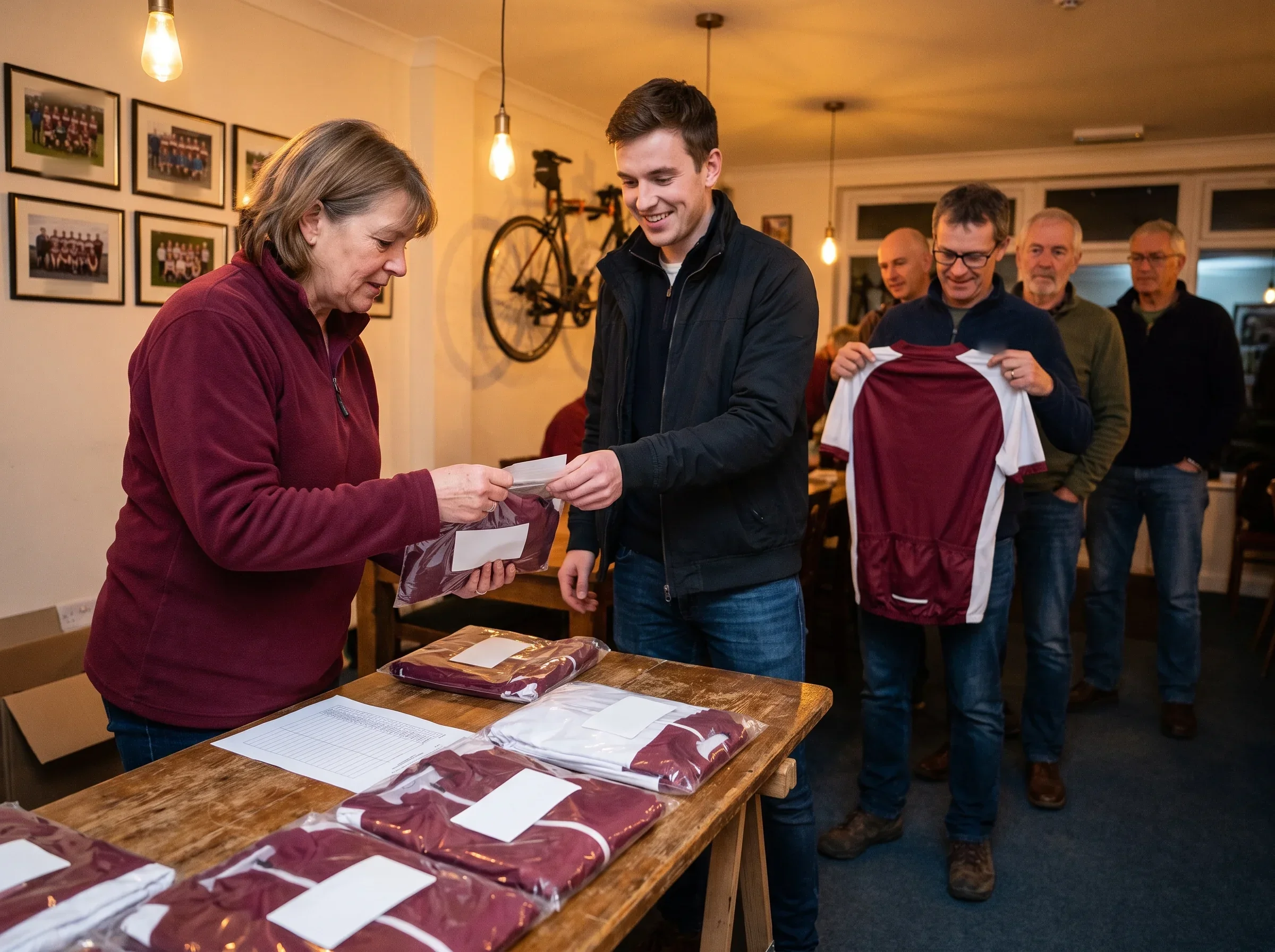
- One bag per rider, labelled with name and size
- Replies within 24 hours on working days
One Club Kit Year: Proof Rounds, Ordering Window, Lock, Club Night, New Members and the Team File
Every club we supply moves through the same kit year. The three club set-ups further down are three ways through it, and they differ in how many windows open and where new members join.
We run club kit for the committee member who holds the kit job, from the first proof your committee reviews to the bags you hand out at club night and the file the next kit secretary inherits.
Single-window club
- Proof rounds
- Window
- Lock
- Club night
- Waitlist
- Team file
- Main window
Club with an autumn window
- Proof rounds
- Window
- Lock
- Club night
- Summer waitlist
- Autumn window
- Lock
- Packing list
- Team file
- Jerseys
Race squad and social members
- Proof rounds
- One window
- Cell check
- Two kinds of bag
- Waitlist
- Autumn window
- Team file
- 1
Committee proof rounds.
The layout proof and combined kit view go out as a PDF. Your committee and sponsors comment, you send one combined reply per round, and you sign the final version. - 2
Ordering window.
The Order Desk opens a roster link or private team store on the date in your plan. Members enter name, size for each piece, and number. - 3
Entry checks.
The Order Desk checks duplicate numbers and sends you the names of members with no entry. - 4
Roster lock.
You and the Order Desk sign the locked roster on the close date. - 5
Production, packing and club night.
One run per window, one bag per rider, handed out by name. - 6
New members between windows.
They register on the waitlist through the roster link. - 7
Autumn window, where your club runs one.
The whole club orders outer layers, and the waitlist joins in. - 8
Season close and AGM.
The team file is updated and passes to the next kit secretary.
Single-Window Clubs: One Cycling Club Kit Order Before the Season Opens
A single-window club settles the whole year's kit in one pre-season round. The kit has to be in members' hands for the first club ride, and nothing is ordered after that until next season.
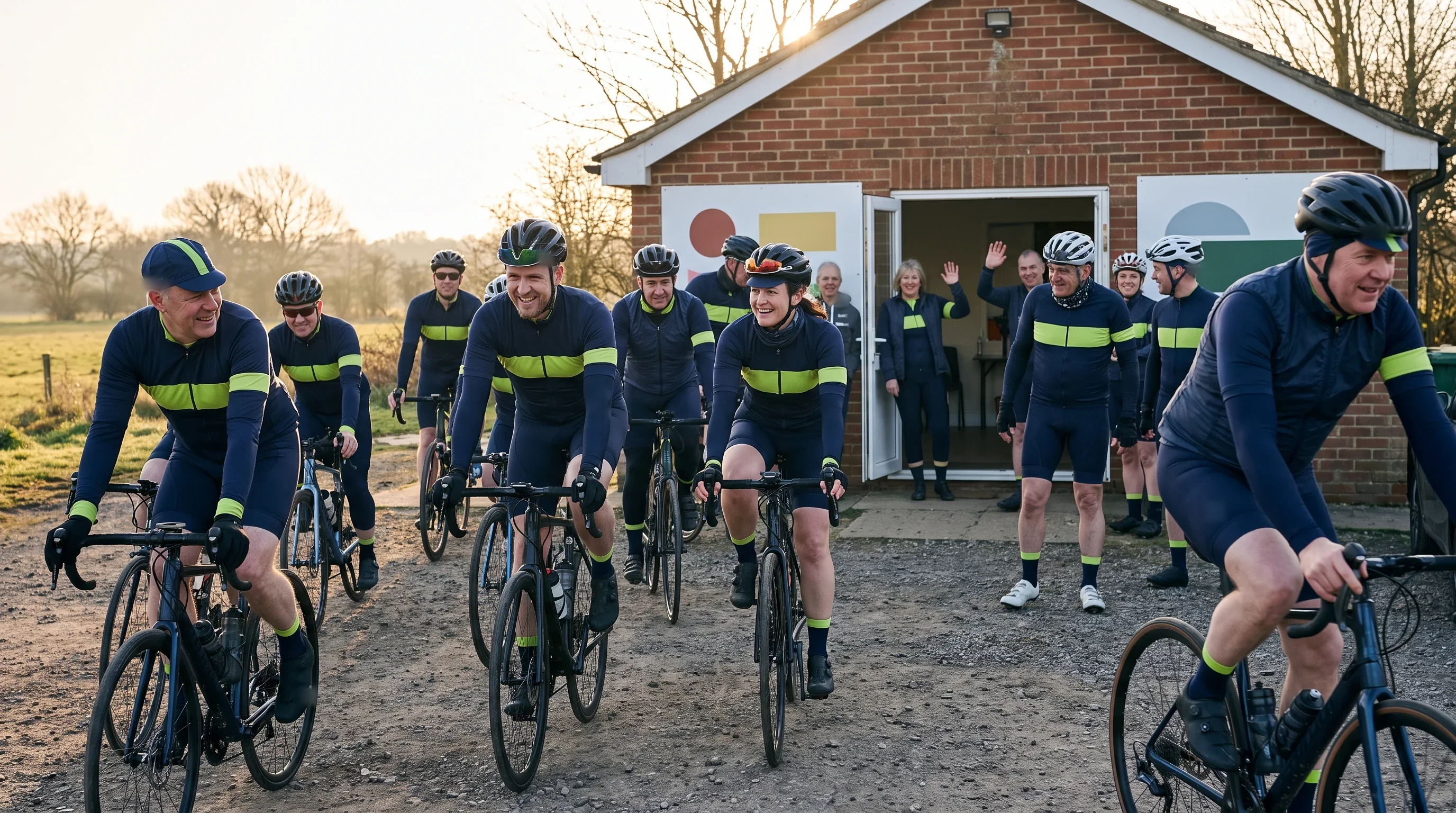
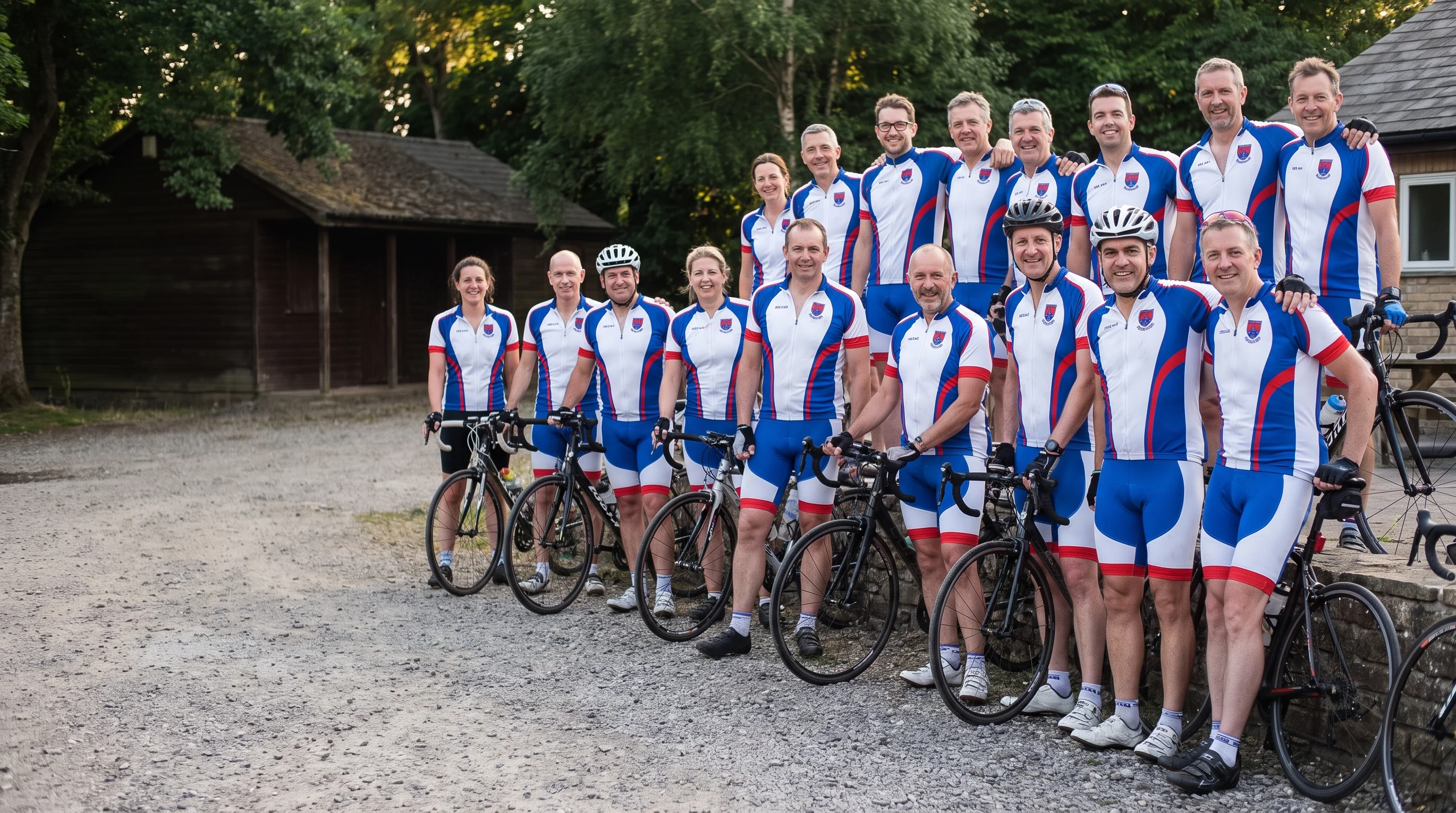
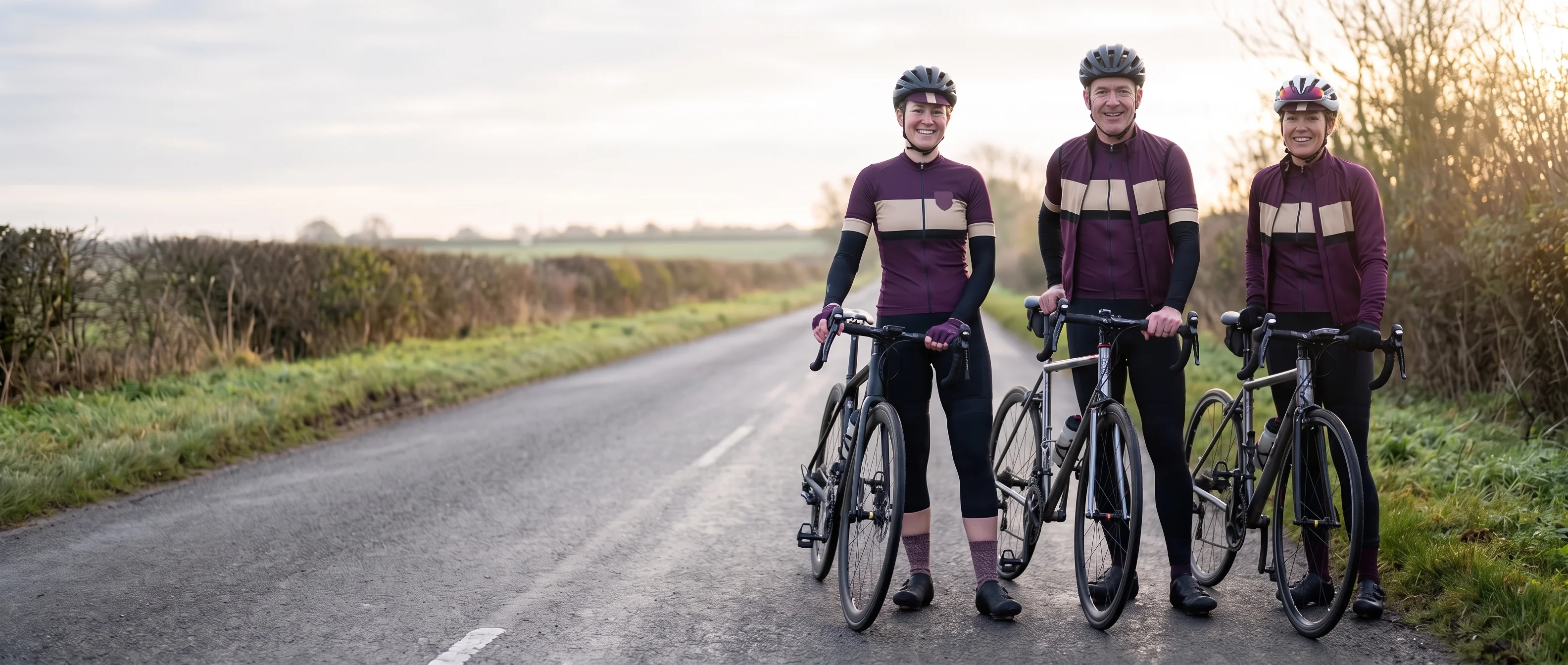
What comes in from the club: the colours the committee approved, the crest and sponsor logos as vector files, the member list, and the date of the first club ride. The order can be jersey, gilet and jacket together, as in the club on our home page, with caps, socks or warmers added as the committee decides.
Single-window club
- Proof rounds
- Window
- Lock
- Club night
- Waitlist
- Team file
- Main window
The kit year in a single-window club runs in four steps:
- 1
Proof.
The proof goes to the committee and sponsors, and comes back to you as one combined reply each round until you sign. - 2
Window.
The Order Desk opens the window, members enter their own details, and every number is checked for duplicates while it is open. - 3
Chasing.
Before the close date you receive the names of members who have not entered, and you chase only those. - 4
Lock.
You sign the locked roster once, with the Order Desk, and it goes to production with the signed proof.
The roster lock is the one handover in this club's year. Between lock and delivery, you only read the Programme Coordinator's written notice if a date moves.
Members who join after the lock go on the waitlist for next season's main window. The club on our home page ran this way:
- 24riders,
- with 5new entries
- and 3size changes in its second season.
The year ends at club night. You hand each bag to the name on its label, and
- every bag label,
- its line on the packing list
- and its line on the locked roster carry the same name and sizes.
Clubs With a Pre-Season Window and an Autumn Window for Outer Layers
A club with two windows takes on new members through the summer, and needs outer layers for the whole club before the weather turns. The year has two ordering windows, and new members join through the second one.
Club with an autumn window
- Proof rounds
- Window
- Lock
- Club night
- Summer waitlist
- Autumn window
- Lock
- Packing list
- Team file
- Jerseys
The kit year in a two-window club runs in three stages:
- 1
Pre-season window.
Jerseys, with caps and socks if the club wants them. Its own proof sign-off, locked roster, production run and packing list, as in a single-window club. - 2
Summer waitlist.
Each new member gets the roster link from you and registers name, sizes and number. The waitlist sits with the Order Desk, and you keep no notebook of who joined. - 3
Autumn window.
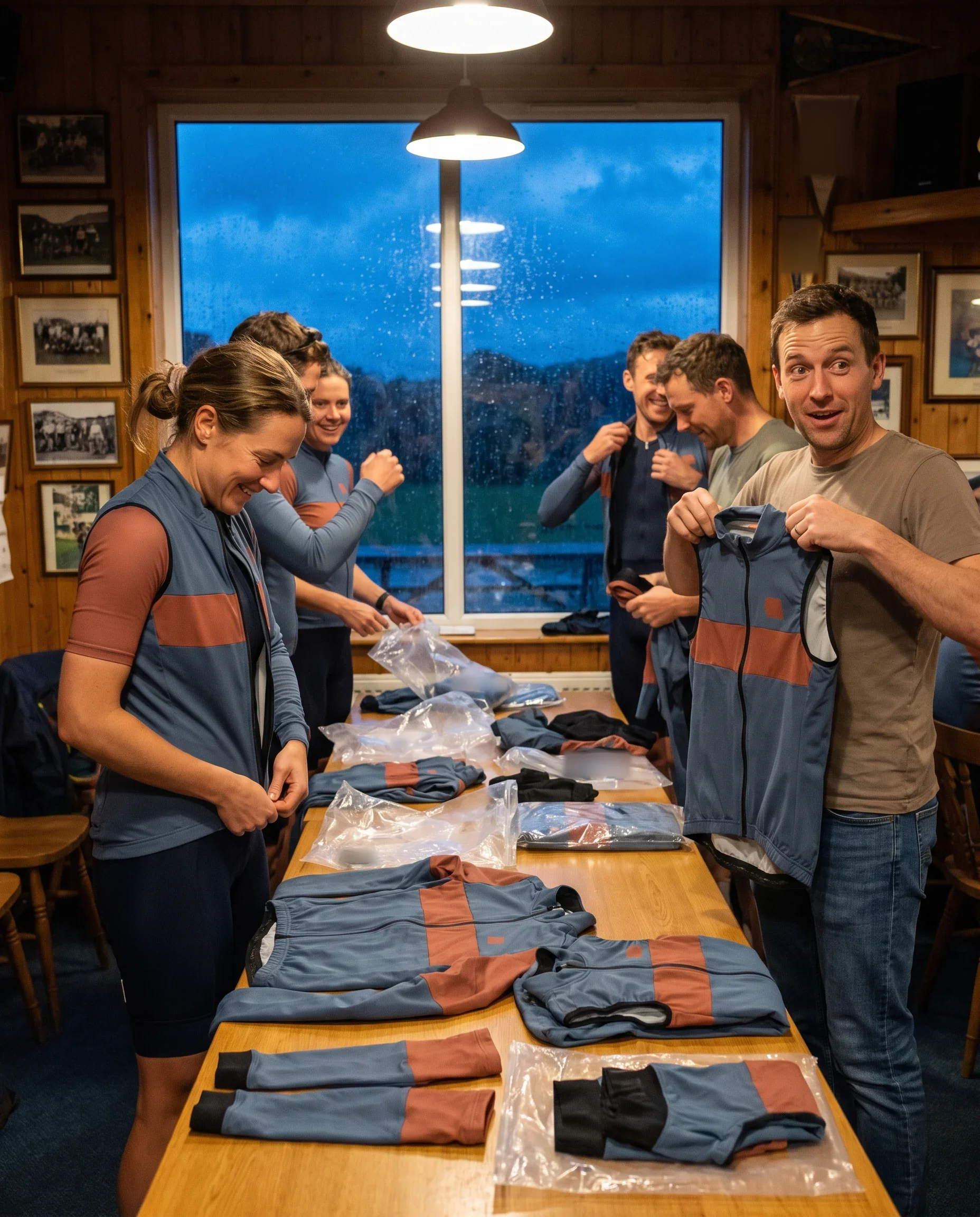
Jackets, gilets and warmers for the whole club, drawn by the Kit Layout Designer from your team file with the summer colour parameters, and added to the combined kit view as a new dated version you co-sign.
This club's year has two handovers: the roster locks twice, each lock with its own production run and packing list.
When the autumn window opens, the Order Desk carries every waitlisted member into it. They order the outer layers with the rest of the club and lock with them; their jersey order is carried into next season's main window, where jerseys are printed for the whole club.
The year ends with the autumn packing list. It holds a line for every member from the waitlist, next to the returning members ordering their outer layers.
Race Squad and Social Members on One Kit, One Roster and One Window
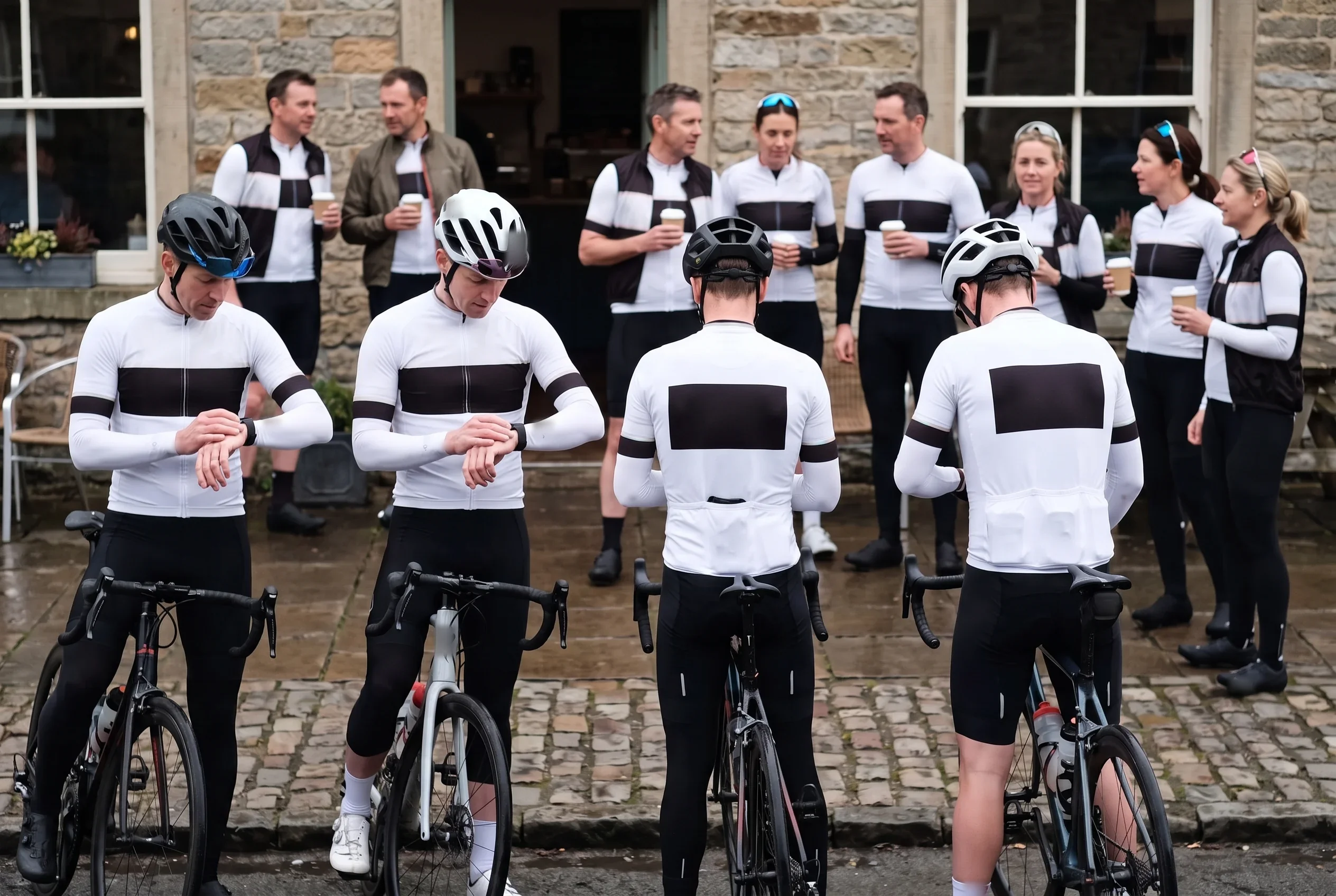
Clubs with a race squad and a social membership order cycling club team kits for two groups at once. Both groups ride in the same colourway, and they need different pieces and different number rules.
Race squad and social members
- Proof rounds
- One window
- Cell check
- Two kinds of bag
- Waitlist
- Autumn window
- Team file
What the club sets on the proof and the roster:
- Number rules. Race squad members carry numbers. The number column for social members stays blank, so nothing is printed in that place on their jerseys.
- One window, one roster. Both groups order in the same window and sit on one locked roster.
- Rider, piece and size. A race squad member may take a race fit jersey and warmers; a social member a club fit jersey, gilet and jacket. Each member enters a size only under the pieces they order.
The handover in this club's year is the cell check at lock. Before you sign, the Order Desk checks every cell for missed entries and for pieces entered without being ordered, and checks that numbers appear only on race squad rows, with no duplicates.
Names and numbers are printed straight from the locked roster, line by line, in the same sublimation run as the rest of the club's order. Each printed panel matches one roster line.
The year ends with two kinds of bag in one delivery.
- Every race squad bag holds a jersey whose back matches its roster line exactly,
- and every social bag holds a jersey with the number space left clear.
One Member Who Joins Mid-Season, Followed Through All Three Clubs
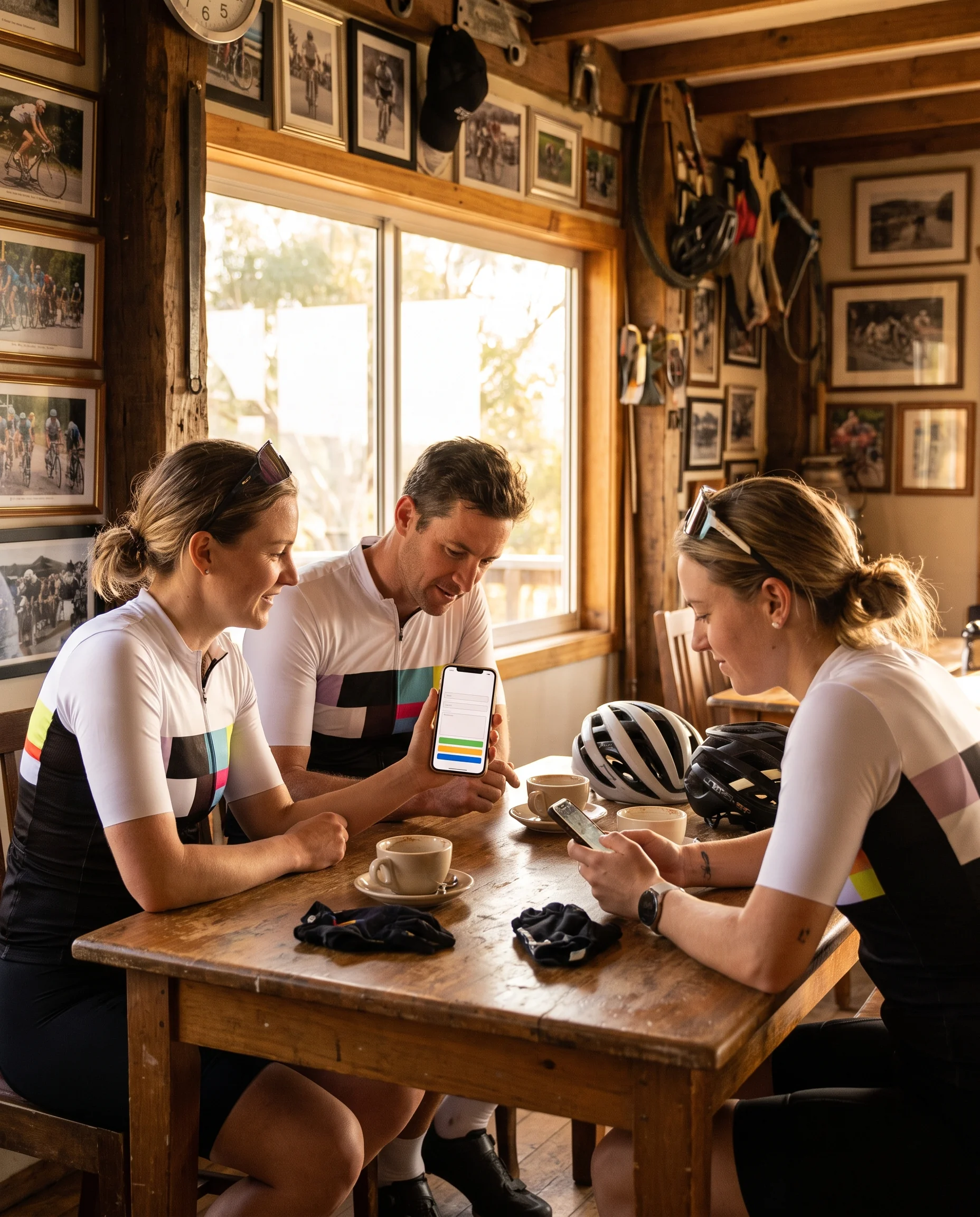
Take one rider who joins your club partway through the summer, after the main window has locked. The same steps happen in every club: you send the rider the roster link, the rider registers on the waitlist, and the Order Desk carries the entry into the next window.
When that window opens, the Order Desk moves each waitlisted entry onto the new roster. It checks the rider's number against every returning member and against other new members, and applies the number rules from the signed proof. The rider then locks with the rest of the club, on the roster you sign.
Single-window club
- Joins
- Waitlist
- Main window
Club with an autumn window
- Joins
- Waitlist
- Autumn window
Race squad and social members
- Joins
- Waitlist
- Next window
What differs between the three clubs is which window that is, and what the rider receives in it.
- The next window is next season's main window. The rider stays on the waitlist through winter and orders alongside returning members. Their first bag arrives at next season's first club night.
- The next window is the autumn one. The rider orders the outer layers with the whole club, and their bag arrives with the club's autumn delivery; their jersey follows in next season's main window.
- The window follows the club's calendar; the difference is the number column. A social rider enters no number. A race squad rider's number is checked against the whole roster before lock.
Your part is the same in all three: forward the roster link when someone joins, and sign the roster when the window closes. If your newest members wait for next season, your club is the first type. If they get kit before winter, it is the second.
Send Your Club Calendar for a Window Plan
Send your club calendar and your members' joining pattern, and the ordering plan comes back with your windows, their dates and where new members join.
Get a club ordering planCommittee Proof Rounds: One Combined Reply per Round and a Dated Version Each Time
A custom club cycling kit goes to your committee before any member orders. The Kit Layout Designer sends the layout proof to you as a PDF: every piece your club ordered, each sponsor zone, crest position and number rule, and a combined kit view showing the pieces worn together.
You forward the PDF to anyone who needs to see it: committee members, your main sponsor, and members who want a first look at the kit.
Each round runs in six steps:
- 1
Comments come back to you.
Committee members and sponsors send their comments to you, and the Programme Coordinator receives nothing from them directly. - 2
You send one combined reply.
You gather every comment and send one reply to the Programme Coordinator per round. Where a committee member and a sponsor ask for different things, your reply decides which version is drawn. - 3
The Kit Layout Designer redraws.
Every point in your reply is applied to the proof. - 4
A new dated version comes back.
Each revised proof is saved as a new version with its date, and every change from the previous version is marked on it. - 5
The earlier version stays on record.
Older versions are kept in your team file, never overwritten. - 6
You sign the final round.
Rounds continue until you sign, the signed version opens the ordering window, and the team store shows members only that signed kit.
Round 1
Round 2
Final round
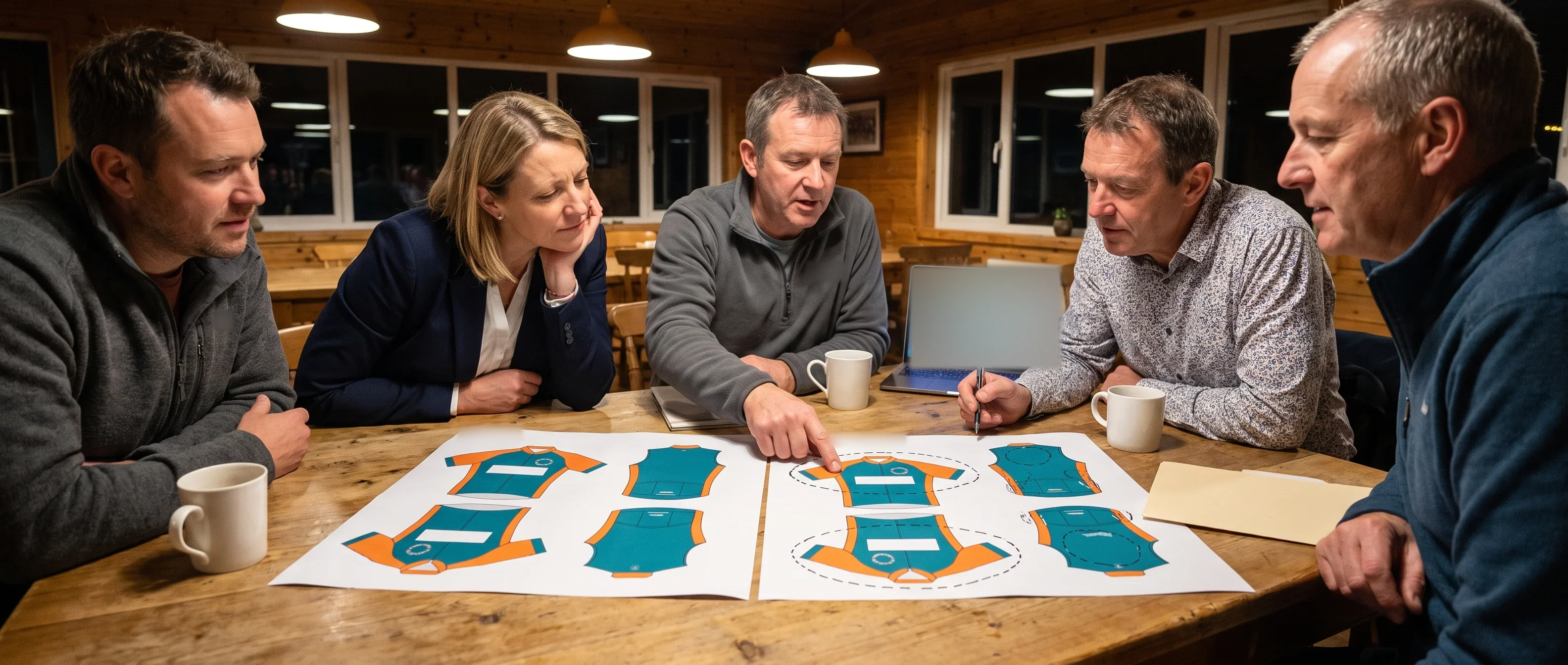
Your committee checks a round by laying the newest version beside the previous one and reading only the marked changes. If someone says the last draft was different, the dated earlier version settles it.
Emailed artwork from a print shop is usually replaced by the next file; here every round stays in the file.Sponsors' places on the kit are settled in these rounds. Main sponsor zones on the outer layers show on the combined kit view, so a sponsor sees its logo over a gilet or jacket before signing off. Sponsor ranking and zone allocation are covered on our sponsor logo placement page.
Each round takes as long as your club needs to return its one reply. Put your committee meeting dates in the calendar you send us, and the Programme Coordinator sets sign-off after the meeting that will approve the proof. The window calendar below works back from that date.
Four Signed Documents and Your Team File, With ISO 9001:2015, OEKO-TEX® STANDARD 100 and BSCI
Each step of your club's year leaves a signed document with you, and each one names who signed it.
Signed layout proof.
Drawn and signed by the Kit Layout Designer, co-signed by you.Holds every piece, sponsor zone, crest position and number rule, plus the combined kit view.Locked roster.
Signed by the Order Desk and you on the close date.Every member's name, size for each piece and number.Packing list.
Signed by the Packing Lead.One line per rider and piece, ticked as each bag is checked.Team file record.
Signed by the Programme Coordinator at season close:colour parameters, proof version and that season's locked roster.
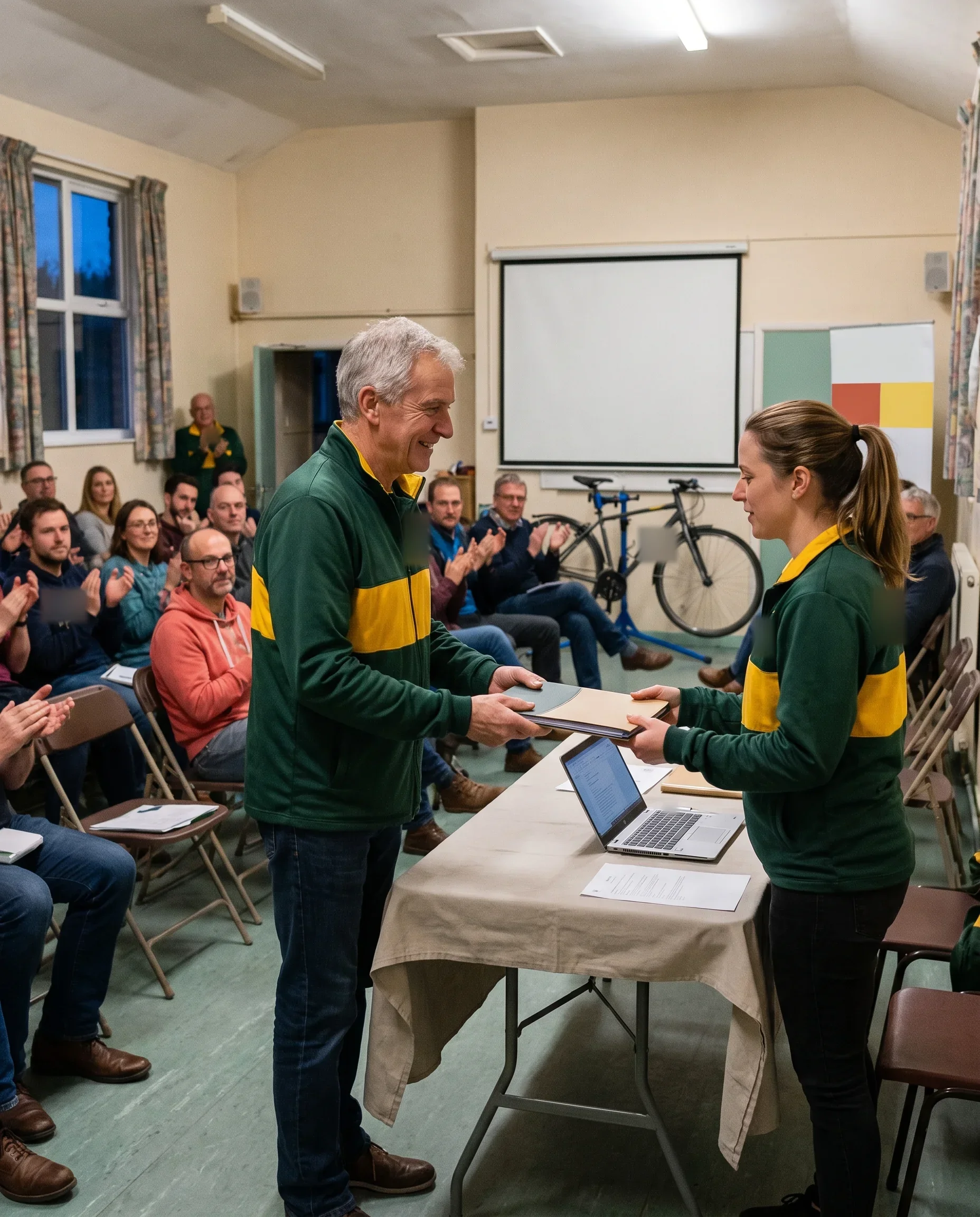
At your AGM these documents answer the questions committees ask. The proof versions show which sponsor sat in which zone in which season. The locked roster shows what each member entered and when the list closed.
Your team file records every change as a new dated version. Only the Programme Coordinator and the Kit Layout Designer can edit it, and any change to the layout needs your co-signature. We keep the file for 5 years after your club's last order, and you can ask for a copy at any time.
When your AGM elects a new kit secretary, you hand over the copy. Your successor places the next order from it, with no new size collection for the whole club and no redrawn layout.
A catalogue teamwear supplier keeps the design and collects sizes again; your file holds both.- ISO 9001:2015 certificate for our quality management system.
- OEKO-TEX® STANDARD 100 certificates for the fabrics in your kit.
- BSCI social compliance audit.
If a delivered piece looks wrong, send photos to the Programme Coordinator. We reply within 24 hours on working days and decide each case against the signed proof and locked roster, under the rules on our home page.
Window Calendar Worked Back From Your First Club Ride and Your First Cold Rides
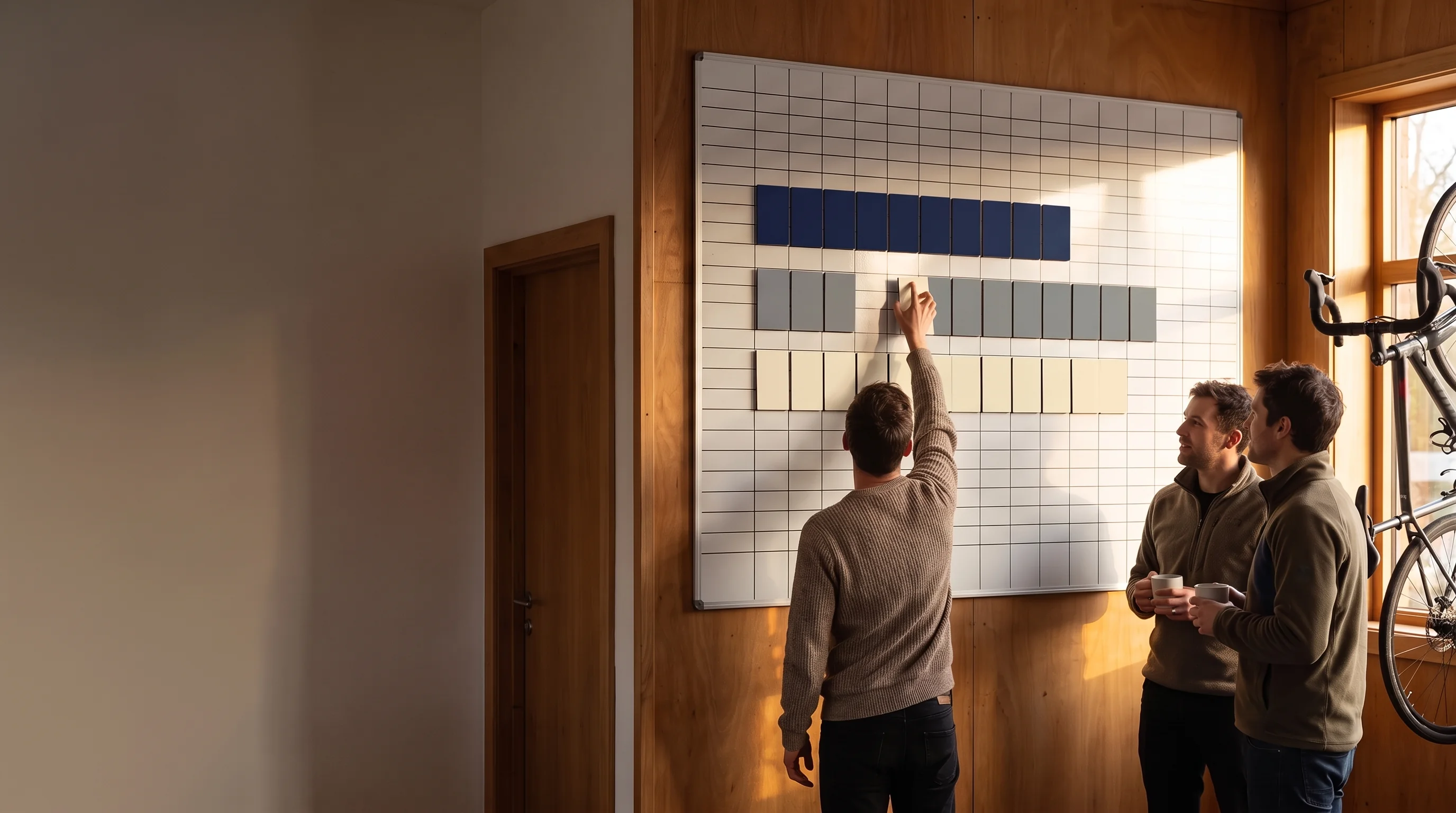
The Programme Coordinator sets every window in your plan backwards from the date the kit has to be in members' hands: the first club ride for the main window, and the first cold-weather rides for an autumn window.
The calculation runs in four steps, latest date first:
- 1
Kit in hand.
The date from your club calendar. - 2
Roster lock.
Bulk production takes 20–30 days from roster lock, and rush production 12–15 days, so the lock date sits that far ahead of your date, with shipping on top. - 3
Window open and close.
Members need time to enter their details and you need time to chase missing names, so the window opens ahead of the lock. - 4
Proof sign-off.
The signed proof opens the window, so sign-off sits before it, after the committee meeting that approves the proof. A round added after the planned sign-off moves the window, and you receive the new dates in writing.
Your plan lists the open, close and lock dates for each window in writing. An autumn window is worked out the same way, from its own date. Members carried from the waitlist receive kit on the date of the window they join.
Where a committee date leaves too little time before your first club ride, the plan can set the lock on rush production instead. For an autumn window, the waitlist closes when the window opens, so every member who joined over the summer is on the roster before the club's outer-layer order locks.
The Programme Coordinator follows production from lock to packing. If any date moves, you are told in writing as soon as we know, so you can tell your members before club night.
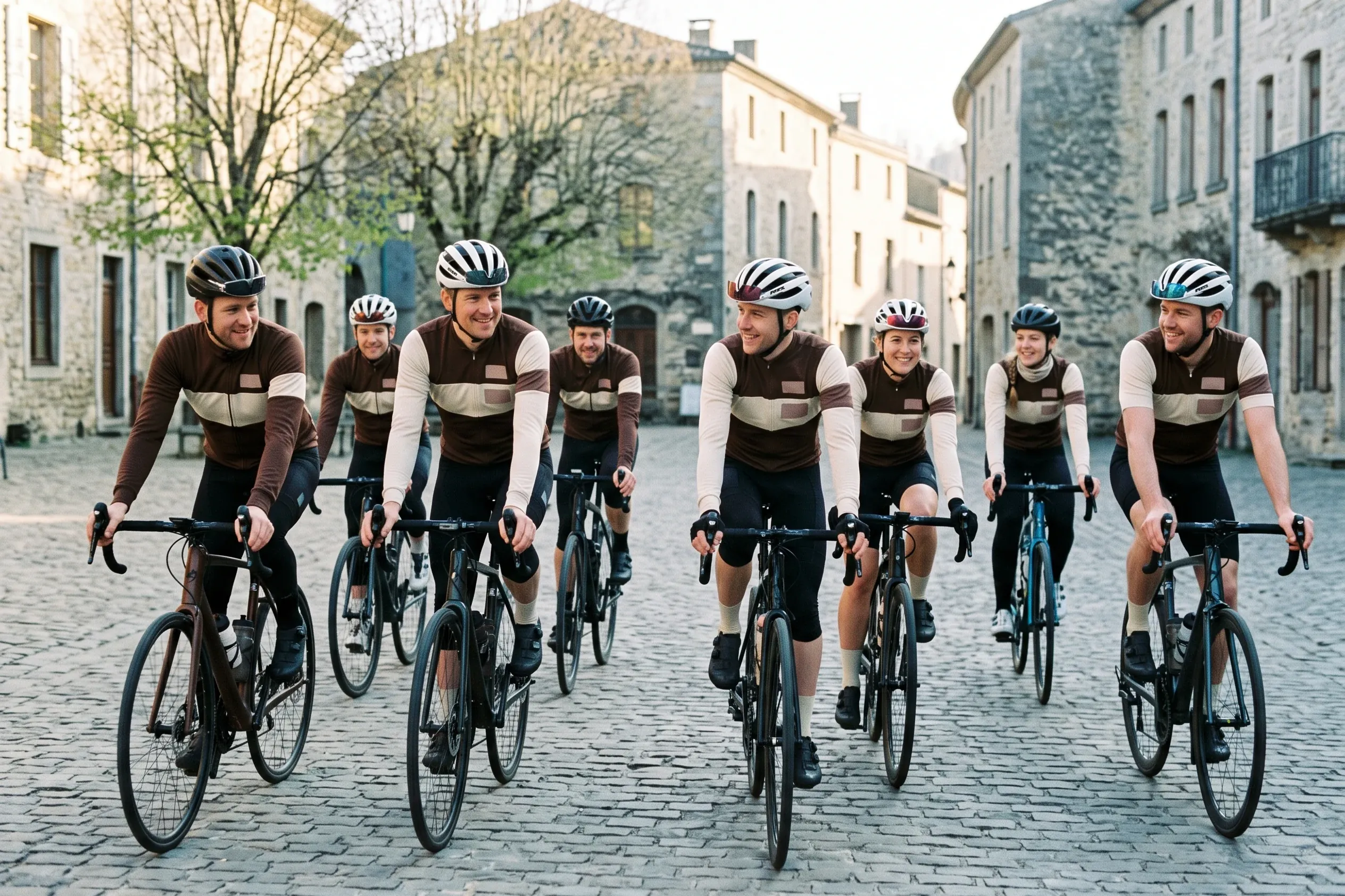
Club Set-Up to Windows, Pieces and Number Rules
| Club set-up | Windows in the year | Pieces in each window | Number rules on the proof | New members between windows |
|---|---|---|---|---|
| Single-window club | Pre-season main window | Jersey, gilet and jacket, with caps, socks or warmers as chosen | Numbers for every member, or none | Waitlist, carried into next season's main window |
| Club with an autumn window | Pre-season main window and autumn window | Summer pieces in the main window; jackets, gilets and warmers for the whole club in autumn | As the club chooses | Waitlist, carried into the autumn window for outer layers; jerseys in next season's main window |
| Race squad and social members | Pre-season main window, plus an autumn window if the club runs one | Each member's own pieces, cell by cell on one roster | Race squad rows numbered; social rows blank | Waitlist, with the number decided by section |
Club Programme Edges: One Window per Production Run, One Address, One Contact
Our club programme has three edges, each set by how the programme runs, and each with our answer.
One window, one run.
Each window has one locked roster and one production run, printed from that roster. Nothing is printed for one member between windows.Our answer is the waitlist and, where wanted, an autumn window.
One delivery address per window.
Every bag is checked against the locked roster and packing list, and the club ships together to the kit secretary.Our answer is the labelled bag, handed out by name at club night.
One contact on each side.
The Programme Coordinator works with you, and committee members and sponsors reach us through your combined reply.Our answer is the PDF proof you can forward to anyone.

The kit range is six pieces: jersey, gilet, jacket, arm and leg warmers, cap and socks. Bib shorts and chamois-bearing garments are developed and sampled to your club's reference specification as a separate project through procyclingapparel.com.
All three club set-ups above run inside these edges.
Inputs for Your Club's Ordering Plan, and the Date Each Item Fixes
Each item you send fixes one part of your plan. Anything missing leaves that date open until it arrives.
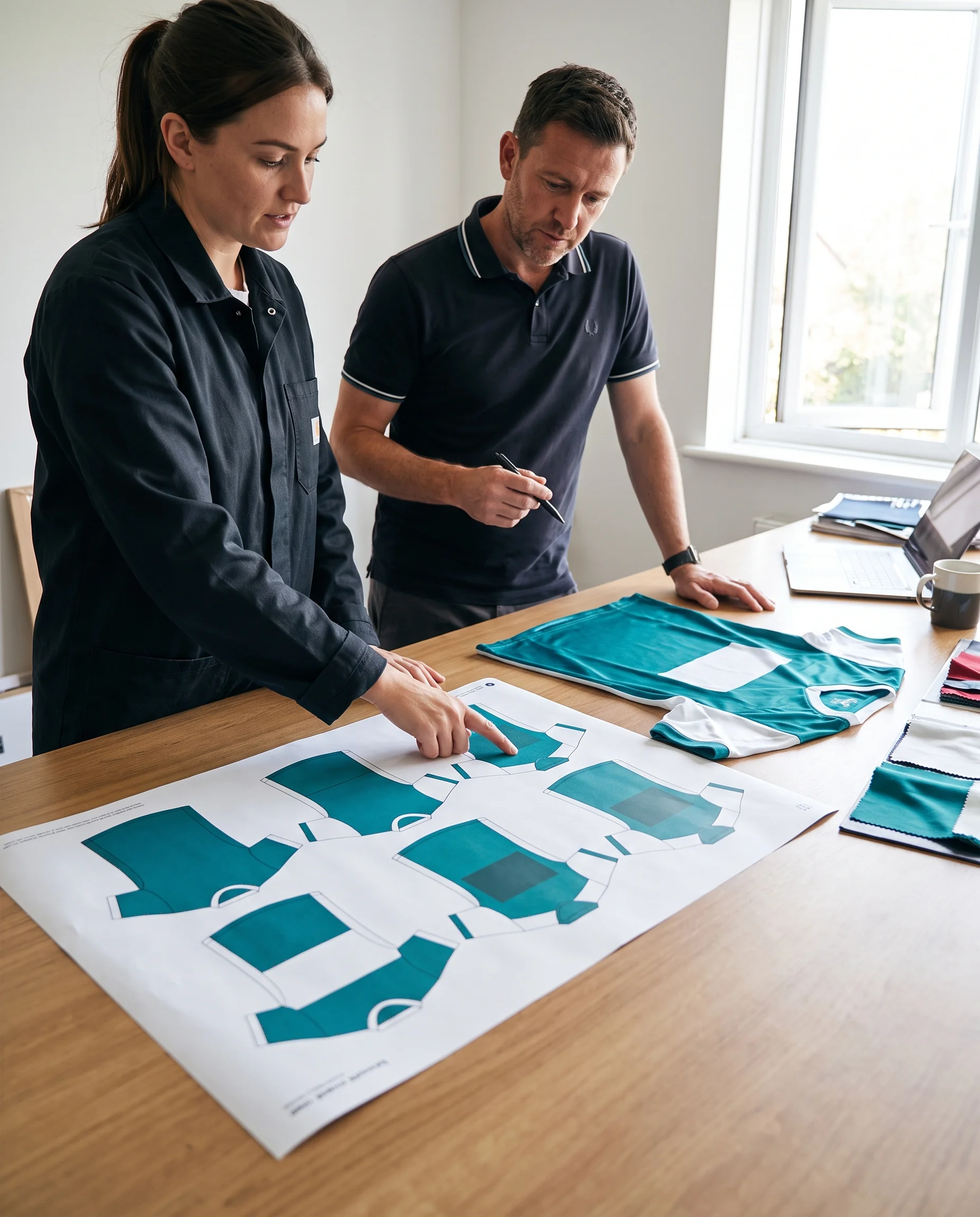
Club calendar.
Your first club ride, your AGM, committee meeting dates and the start of cold-weather riding.Without it, no lock date can be set for any window.Members' joining pattern.
When new members usually join, and whether most arrive before the season or through it.Without it, the plan cannot show whether your club needs an autumn window.Race squad.
Whether your club has one, and which members carry numbers.Without it, the number rules cannot be drawn, so the proof sign-off date stays open.Pieces.
Which of the six pieces your club wants, and in which window.Without it, the window contents stay open.Team size and team type.
Your member count and club structure, so the Programme Coordinator can set the ordering path.Current kit or design files.
Photos of your current kit, or vector files of crest and sponsor logos.Without them, the first proof round cannot be dated.
Pages for the Next Step Once Your Club Set-Up Is Clear
- Team kit ordering process: every step of a first order, from first message to kit in hand.
- Team kit reorder program: how next season's order opens with returning members' details filled in.
- Team kit design service: how the layout proof is drawn from your crest and colours.
- Sponsor logo placement: how sponsors are ranked and which zone each one holds.
- Club fit cycling jersey sizing: how members measure and choose sizes.
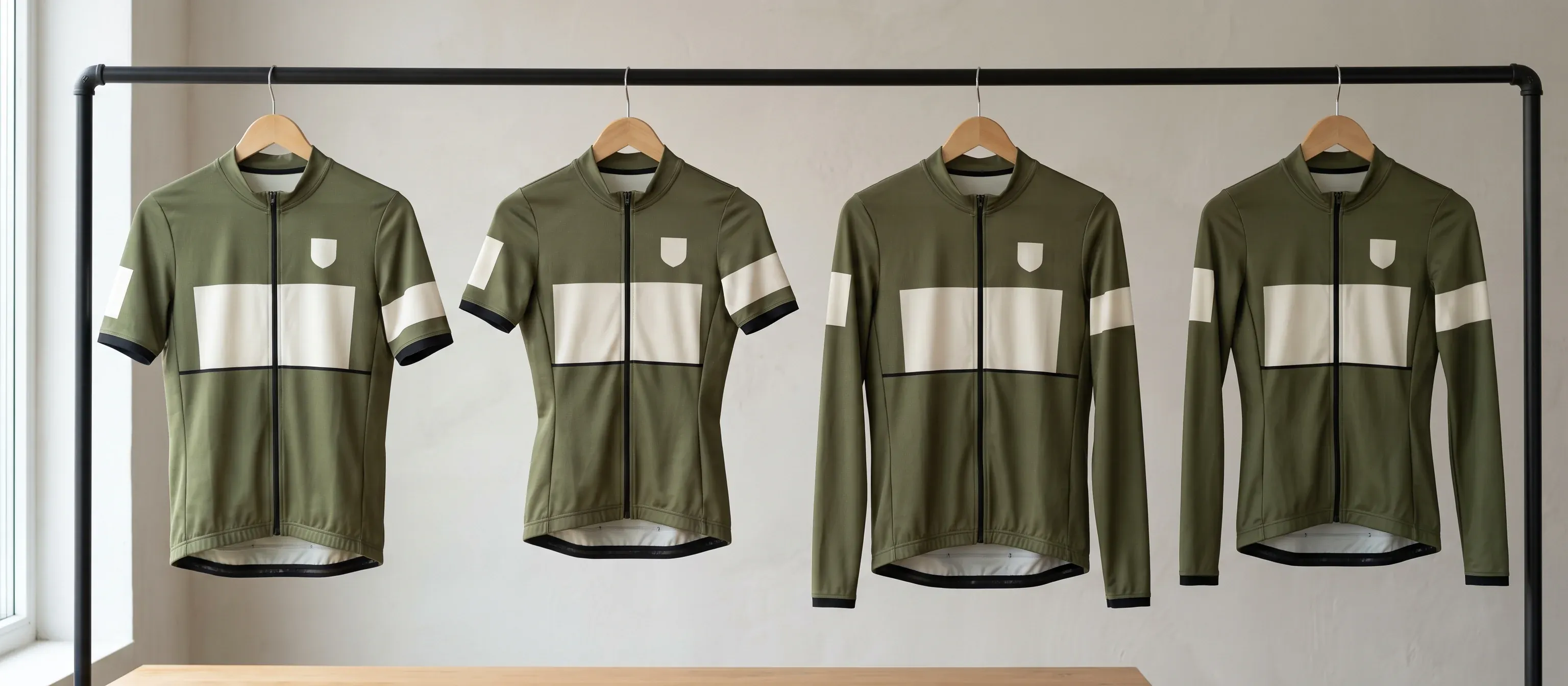

Get Your Club's Window Plan
Send your club calendar and how members join through the year, and the ordering plan comes back with your windows and every date in them.